




Emergency 0484 7185000

 Second Opinion
  Book
an Appointment
Book
an Appointment
 Our Doctors
Offcanvas
Emergency
0484 7185000
Call Us
8593882299
Centres of Excellence




0484 7185000
8593882299
A brain aneurysm is a weakened, bulging area in an artery. An arteriovenous malformation (AVM) is an abnormal connection between arteries and veins that bypasses the usual capillary network. Other vascular malformations can occur in the brain, spinal cord or surrounding coverings. Some are discovered incidentally, while others cause headache, seizures, bleeding or progressive neurological symptoms.
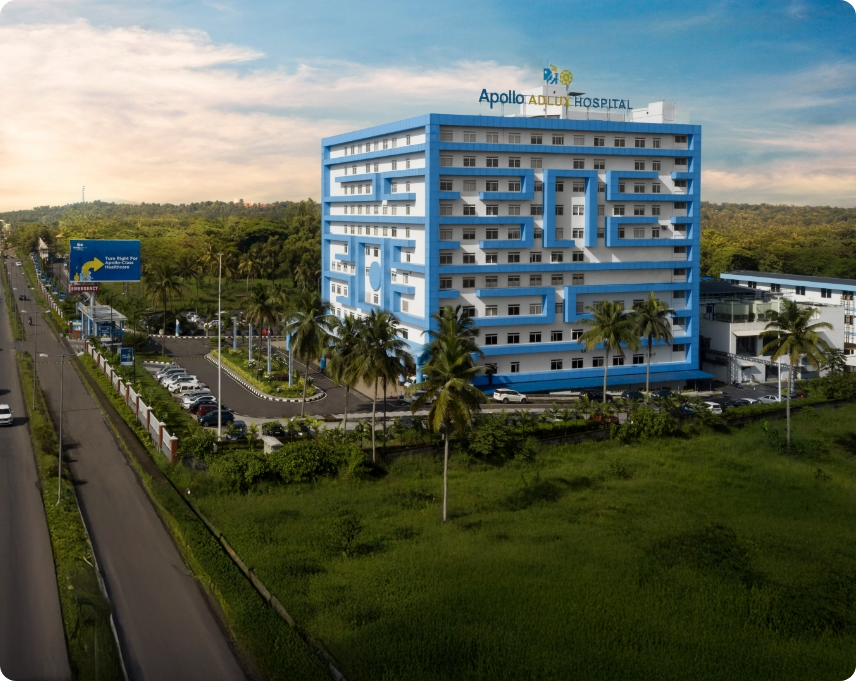
Neurovascular care at Apollo Adlux Hospital, Angamaly, brings together neurosurgical and endovascular assessment to select the most appropriate option for each patient. Treatment may involve monitoring, microsurgery, endovascular therapy or a planned combination.
Symptoms and emergency warning signs: A ruptured aneurysm may cause a sudden, extremely severe headache, often with vomiting, neck stiffness, loss of consciousness, confusion, weakness or seizure. This is a medical emergency. AVMs and other malformations may present with a brain haemorrhage, seizure, headache, weakness, numbness, speech difficulty or progressive spinal symptoms. Not every unruptured aneurysm or AVM causes symptoms. The risk of future bleeding and the risk of treatment must therefore be assessed individually rather than assuming that every lesion requires immediate intervention.
Microsurgical clipping places a clip across the neck of a selected aneurysm to exclude it from circulation. Microsurgical AVM removal may be considered when the anatomy and estimated surgical risk are favourable. High-magnification microneurosurgery helps the surgeon work around small vessels and critical brain structures.
Endovascular treatment is performed through a blood vessel using image guidance. Options may include aneurysm coiling, stent-assisted techniques, flow diversion or embolisation, depending on the lesion and device suitability. For AVMs or fistulas, embolisation may reduce or close abnormal blood flow and may be used alone or before surgery or radiosurgery. No single technique is best for every patient.
Patients may need neurological monitoring, blood pressure management, medication and repeat vascular imaging. Recovery depends on whether the lesion ruptured, whether a stroke occurred and the treatment performed. Rehabilitation may be needed after haemorrhage or neurological injury. Follow-up is important because some treated lesions require imaging to confirm durable closure.
Why choose Apollo Adlux Hospital, Angamaly: Patients receive coordinated evaluation for complex brain, spine and nerve conditions with access to emergency care, diagnostic imaging, critical care and rehabilitation support as clinically required. Treatment is planned around the diagnosis, neurological function and individual goals.