




Emergency 0484 7185000

 Second Opinion
  Book
an Appointment
Book
an Appointment
 Our Doctors
Offcanvas
Emergency
0484 7185000
Call Us
8593882299
Centres of Excellence




0484 7185000
8593882299
Degenerative spine disorders develop when discs, joints, ligaments or bones change over time and begin to irritate or compress nerves. Common problems include disc bulges and prolapses, cervical or lumbar spondylosis, and lumbar canal stenosis. Symptoms may include back or neck pain, pain radiating to an arm or leg, numbness, weakness, reduced walking distance or loss of balance.
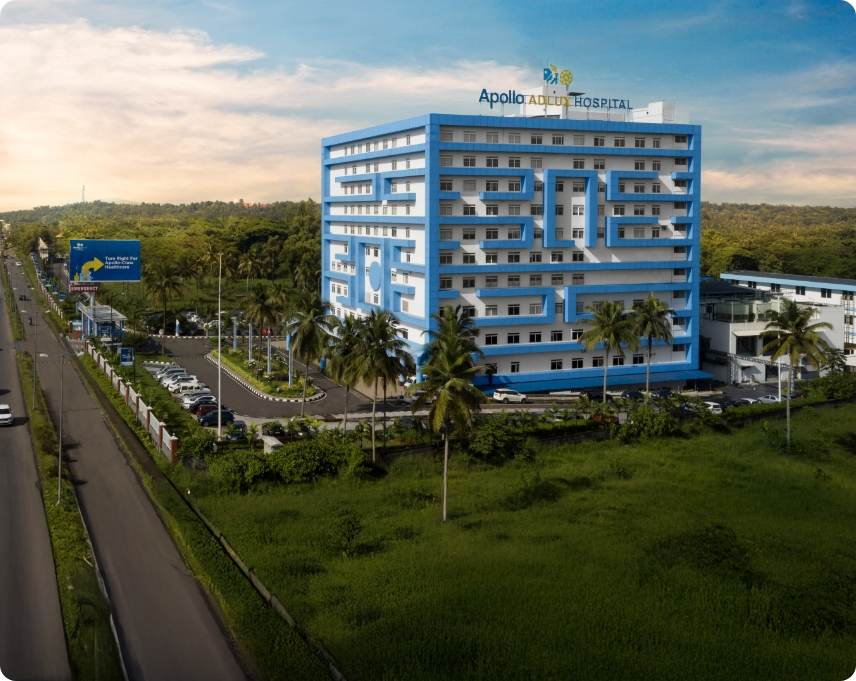
Most patients do not need surgery. At Apollo Adlux Hospital, Angamaly, evaluation begins with the symptoms, neurological examination and appropriate imaging. Surgery is considered when there is significant nerve or spinal cord compression, progressive deficit, disabling symptoms despite non-operative care, or an emergency such as cauda equina syndrome.
Conditions evaluated: A disc prolapse can compress a nerve root and cause sciatica or arm pain. Spondylosis may narrow the spinal canal or nerve openings and, in the neck, may compress the spinal cord. Lumbar canal stenosis often causes leg pain, heaviness or numbness while standing or walking that improves with sitting or bending forward.
Diagnosis should match symptoms with examination and imaging. MRI is often the main test, while X-rays or CT may be useful for alignment, bone detail or surgical planning. An abnormal scan alone is not a reason for surgery because disc and age-related changes are common even in people without pain.
Non-surgical treatment : Initial care may include activity modification, medication, physiotherapy, posture and ergonomic advice, weight management, and selected pain procedures. The plan depends on the cause and whether there is weakness or spinal cord involvement. Persistent or progressive neurological loss requires timely specialist review rather than prolonged self-treatment.
Minimally invasive and endoscopic procedures: Minimally invasive spine surgery uses smaller muscle corridors and targeted decompression where appropriate. Potential procedures include microdiscectomy, endoscopic microdiscectomy, laminotomy or decompression, and selected stabilisation or fusion procedures. The aim is to relieve pressure on a nerve or the spinal cord while limiting unnecessary tissue disruption.
Endoscopic microdiscectomy uses a camera and specialised instruments through a small access route to remove the portion of disc compressing a nerve. It is suitable only for selected disc prolapses. Large or complex compression, instability, deformity, severe bony stenosis or previous surgery may require another approach. The safest procedure is chosen from the anatomy and treatment goal, not the incision size alone.