




Emergency 0484 7185000

 Second Opinion
  Book
an Appointment
Book
an Appointment
 Our Doctors
Offcanvas
Emergency
0484 7185000
Call Us
8593882299
Centres of Excellence




0484 7185000
8593882299
Stroke occurs when blood flow to part of the brain is interrupted by a blocked vessel or when a blood vessel ruptures. Because brain cells can be injured quickly, sudden stroke symptoms require immediate hospital assessment. Interventional neurology can restore blood flow in selected ischaemic strokes and can also help treat certain vascular causes of haemorrhagic stroke. Remember BE FAST: Balance difficulty, Eye or vision change, Face drooping, Arm weakness and Speech difficulty mean it is Time to seek emergency care. Also act immediately for a sudden severe “worst-ever” headache, collapse, new confusion or seizure.
Emergency assessment identifies the type of stroke, the affected vessel, the extent of established injury and whether there is brain tissue that may still benefit from restoring blood flow. Evaluation may include a neurological examination, blood tests, non-contrast CT, CT angiography, CT perfusion, MRI or MR angiography, selected according to urgency and clinical need.
Mechanical thrombectomy for acute ischaemic stroke: Mechanical thrombectomy is an endovascular procedure that removes a clot from a blocked brain artery in eligible patients. A catheter is guided through the blood vessels to the blockage. The clot may be captured with a stent retriever, removed by aspiration or treated with a combination of techniques. The goal is to reopen the artery as quickly and safely as possible.
Eligibility is determined urgently and may depend on the blocked artery, time from when the patient was last known to be well, CT or MRI findings, neurological severity, previous function, bleeding risk and other medical factors. Some patients can benefit beyond the earliest hours when advanced imaging shows potentially salvageable brain tissue, but treatment should never be delayed while waiting to see if symptoms improve.
After the procedure, the patient is monitored closely for neurological changes, blood pressure, bleeding and the condition of the access site. Stroke care also includes identifying the cause, preventing another stroke, swallowing and mobility assessment, and beginning rehabilitation when appropriate.
The carotid arteries in the neck carry blood to the brain. Carotid artery disease develops when plaque narrows one of these arteries. It may be discovered on imaging or after a transient ischaemic attack (TIA) or stroke. Evaluation can include carotid Doppler, CT angiography, MR angiography and, in selected cases, catheter angiography.
Treatment depends on symptoms, degree and location of narrowing, plaque characteristics, age and other health conditions. Risk-factor control and medicines are essential. Some patients may be advised carotid endarterectomy, while selected patients may be considered for carotid angioplasty and stenting after specialist review.
During carotid stenting, a catheter is advanced to the narrowed segment. A balloon may be used to widen the artery and a stent is placed to support the vessel. A protection device may be used in suitable cases to reduce the movement of plaque debris toward the brain. Carotid stenting carries important risks, including stroke, and must be recommended only after comparing it with surgery and medical therapy.
Intracranial atherosclerotic disease (ICAD) is narrowing of arteries inside the skull due to plaque build-up. It can cause TIA or ischaemic stroke and may lead to recurrent symptoms. Diagnosis may involve CT angiography, MR angiography, vessel-wall imaging or catheter angiography.
For most patients, treatment begins with carefully managed medical therapy and aggressive control of blood pressure, cholesterol, diabetes, smoking and other risks. Intracranial angioplasty or stenting is not a routine first-line treatment. It may be considered only in selected patients with recurrent symptoms despite appropriate medical therapy and after detailed review at an experienced centre.
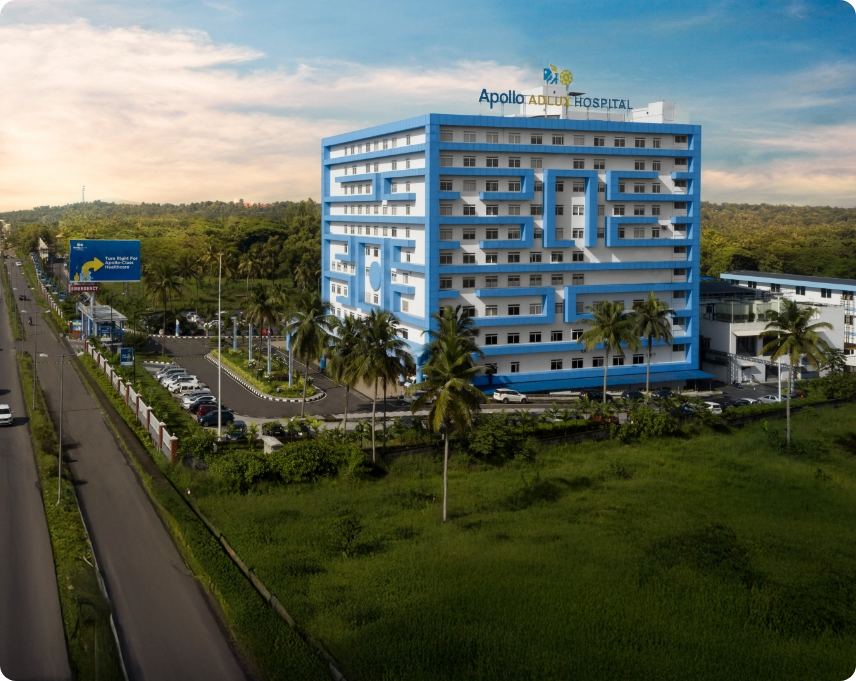
For a planned cerebrovascular consultation or second opinion, contact Apollo Adlux Hospital, Kochi. If stroke symptoms begin suddenly, use emergency services and reach an equipped hospital without delay.