

Emergency 0484 7185000

 Second Opinion
  Book
an Appointment
Book
an Appointment
 Our Doctors
Offcanvas
Emergency
0484 7185000
Call Us
8593882299
Centres of Excellence




0484 7185000
8593882299

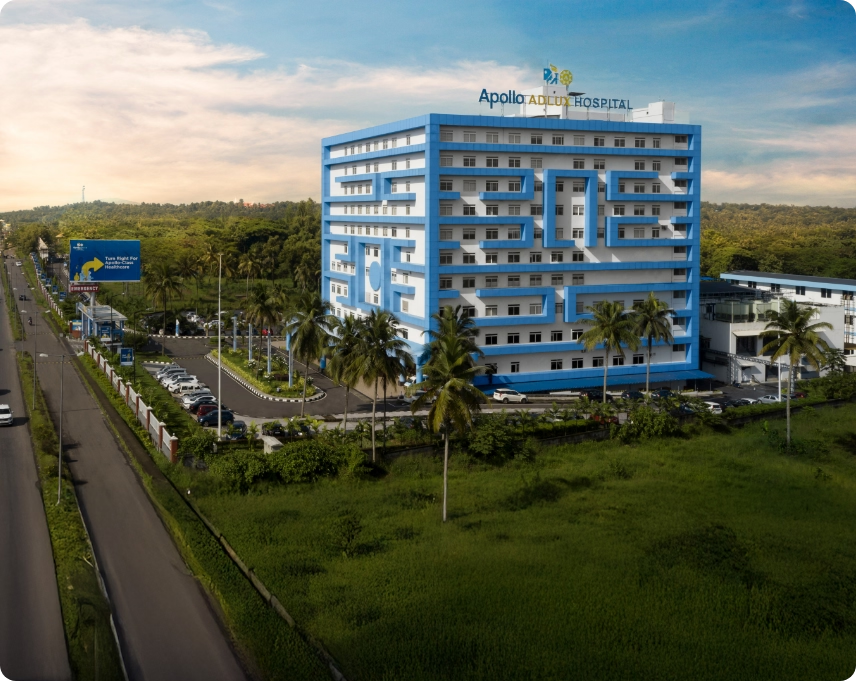
The Department of Robotic Urology at Apollo Adlux Hospital, Kochi provides advanced minimally invasive surgical care for complex diseases affecting the kidneys, prostate, bladder, adrenal glands, ureters and urinary tract. Using the da Vinci Xi Robotic Surgical System, our urology team performs highly precise procedures through small incisions while maintaining established surgical and oncological principles.
Robotic-assisted urological surgery combines a magnified three-dimensional surgical view with articulated instruments that offer greater range of movement than conventional laparoscopic instruments. This can be particularly valuable during procedures that require delicate dissection, reconstruction and suturing around important nerves, blood vessels and urinary structures.
For appropriately selected patients, robotic urology surgery in Kochi may provide advantages such as smaller incisions, reduced blood loss, less post-operative discomfort, shorter hospital stay and faster recovery compared with conventional open surgery. Every patient is individually evaluated to determine whether robotic, laparoscopic or open surgery is the most appropriate treatment.
Apollo Adlux Hospital provides a comprehensive range of robotic urological surgeries in Kerala, including robotic radical prostatectomy, partial nephrectomy, adrenalectomy, radical cystectomy and simple prostatectomy.
Apollo Adlux Hospital, Angamaly provide comprehensive treatment for all types diseases. Our highly qualified doctors and trained clinical staff, ensure the best care for all.
Accurate diagnosis is the foundation of effective heart care. Apollo Adlux Hospital offers comprehensive non- invasive and interventional cardiac investigations supported by modern imaging technologies and experienced cardiologists.

Lorem Ipsum is simply dummy text of the printing and typesetting industry. Lorem
Enquiry nowRecovery varies between patients. Many patients can leave the hospital within a few days following an uncomplicated robotic prostatectomy and gradually return to routine activities over the following weeks. A urinary catheter is usually required temporarily after surgery. Heavy lifting and strenuous exercise should be avoided until the surgeon confirms that healing is adequate.
Recovery of urinary continence and erectile function varies considerably and depends on factors such as age, pre-operative function, cancer characteristics and whether nerve-sparing surgery is clinically appropriate.
When technically and oncologically appropriate, partial nephrectomy can preserve more healthy kidney tissue than radical nephrectomy, which removes the entire kidney. Preserving kidney function can be particularly important in patients with pre-existing renal disease, diabetes, hypertension or other risk factors for future kidney dysfunction.
However, whether partial or radical nephrectomy is appropriate depends on tumour size, location, complexity and overall kidney function.
Yes. Robotic-assisted pyeloplasty may be considered for selected paediatric patients with ureteropelvic junction obstruction. The robotic platform provides magnified visualisation and precise instrument control, which can assist with delicate reconstruction.
The suitability of robotic surgery depends on the child's age, body size, anatomical findings and clinical condition, and the procedure should be planned by an experienced paediatric or reconstructive urology team.
Patients with obesity can have a higher risk of wound-related complications following large abdominal incisions. In carefully selected patients, robotic-assisted kidney transplantation may allow transplantation through smaller surgical access and potentially reduce some wound-related morbidity.
However, suitability depends on several factors including BMI, vascular anatomy, previous surgeries and overall transplant risk, and every patient requires comprehensive transplant evaluation.
Robotic surgery may be considered for selected patients requiring treatment for prostate cancer, kidney tumours, bladder cancer, adrenal conditions, enlarged prostate or complex urinary tract reconstruction. The best surgical approach is determined after clinical assessment, blood tests, imaging and review of the patient's overall health and treatment objectives.