

Emergency 0484 7185000

 Second Opinion
  Book
an Appointment
Book
an Appointment
 Our Doctors
Offcanvas
Emergency
0484 7185000
Call Us
8593882299
Centres of Excellence




0484 7185000
8593882299

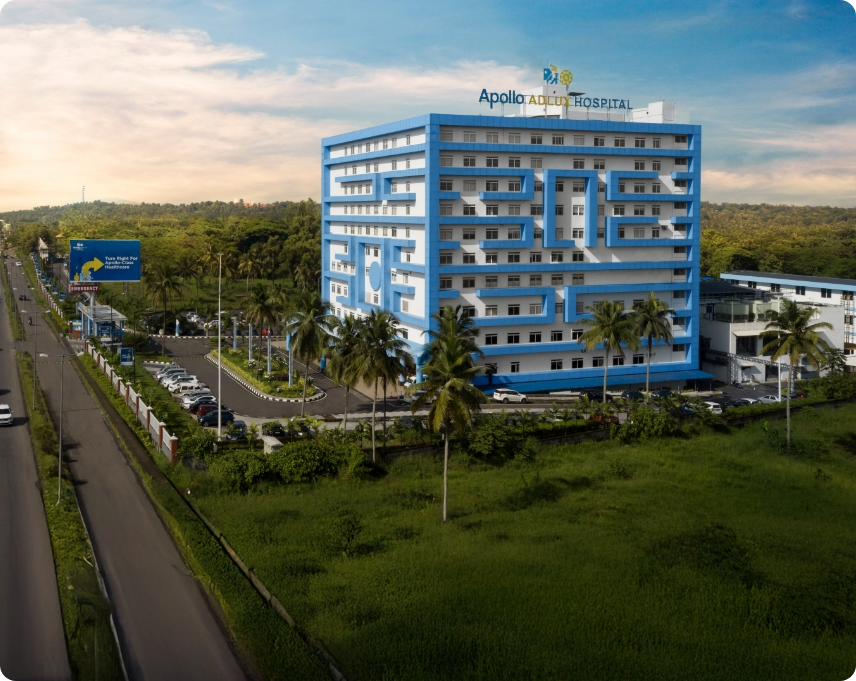
Apollo Adlux Hospital, Kochi offers comprehensive Robotic Cancer Surgery in Kerala using the da Vinci Xi Robotic Surgical System for selected gynaecological, urological, gastrointestinal and thyroid cancers, as well as other oncological procedures where a robotic-assisted approach is clinically appropriate.
Cancer surgery plays a central role in the treatment of many solid tumours. The primary surgical objective is to remove the tumour completely with appropriate margins while preserving healthy surrounding tissue whenever possible and performing lymph node dissection when indicated. Robotic-assisted surgery supports these goals by giving surgeons a magnified three-dimensional view of the operative field, enhanced instrument dexterity and precise control during complex dissection and reconstruction.
The da Vinci Xi robotic platform at Apollo Adlux Hospital does not operate independently. Every surgical movement is controlled by the operating surgeon. The system translates the surgeon’s hand movements into precise actions of specialised robotic instruments inside the patient, helping surgeons work effectively within deep, narrow or anatomically complex areas.
For carefully selected patients, robotic cancer surgery in Kochi may offer smaller incisions, reduced blood loss, less post-operative discomfort, shorter hospital stay and faster recovery compared with conventional open surgery. The decision to use a robotic approach is based on cancer type, stage, tumour location, previous treatments, patient fitness and multidisciplinary assessment.
Apollo Adlux Hospital, Angamaly provide comprehensive treatment for all types diseases. Our highly qualified doctors and trained clinical staff, ensure the best care for all.
Robotic gynaecological cancer surgery may be used for selected cancers involving the uterus, endometrium,
Robotic urological cancer surgery at Apollo Adlux Hospital includes selected procedures for cancers of the prostate,
Robotic-assisted surgery may be used for selected cancers of the oesophagus, stomach, colon, rectum, liver and pancreas.
For carefully selected patients with thyroid cancer, robotic thyroid surgery may provide a remote-access
Robotic surgery is one component of comprehensive cancer treatment. At Apollo Adlux Hospital, every patient's treatment
Accurate diagnosis is the foundation of effective heart care. Apollo Adlux Hospital offers comprehensive non- invasive and interventional cardiac investigations supported by modern imaging technologies and experienced cardiologists.

Lorem Ipsum is simply dummy text of the printing and typesetting industry. Lorem
Enquiry nowPossibly. Robotic surgery does not replace chemotherapy, radiation therapy or other cancer treatments when they are clinically indicated. The need for additional treatment depends on factors such as the type of cancer, pathological stage, tumour grade, lymph node involvement, surgical margin status and molecular characteristics. After surgery, the pathology findings are reviewed to determine whether additional therapy is recommended.
For appropriately selected patients, robotic-assisted cancer surgery may offer benefits such as smaller incisions, reduced blood loss, less post-operative discomfort, shorter hospital stay and faster recovery compared with conventional open surgery.
The enhanced 3D visualisation and flexible robotic instruments may also support precise dissection around important nerves, blood vessels and surrounding organs.
Eligibility depends on the type and stage of cancer, tumour size and location, involvement of surrounding structures, previous surgeries or treatments and the patient's overall medical fitness.
A detailed evaluation including imaging, pathology review and multidisciplinary assessment is required before deciding whether robotic, laparoscopic or conventional open surgery is most appropriate.
Robotic surgery may be considered for selected early-stage and locally advanced cancers, including some Stage III cancers, depending on the organ involved, tumour location and response to other treatments.
Some patients may receive neoadjuvant chemotherapy, radiation therapy or other treatment before surgery to reduce tumour size or improve resectability. Whether robotic surgery is appropriate is decided after detailed imaging and multidisciplinary assessment. Stage alone does not determine the surgical approach, and not every Stage III cancer is suitable for robotic resection.
For several cancer types and appropriately selected patients, minimally invasive robotic surgery can achieve oncological outcomes comparable to established surgical approaches when performed according to accepted cancer surgery principles.
The priority remains complete tumour removal, adequate surgical margins and appropriate lymph node assessment. Robotic technology is used to facilitate the operation; it does not change the fundamental principles of cancer treatment. The most appropriate approach depends on tumour type, stage, anatomy and surgeon expertise.